Different Types of Microprocessors
Microprocessors can be classified based on their data bus width, architecture, and purpose. Mainly, they are of the following types:
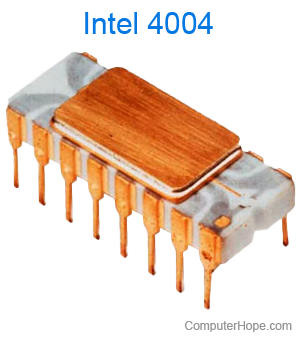
4-bit Microprocessor
Definition: Processes 4 bits of data at a time.
Example: Intel 4004 (first commercial microprocessor)
Characteristics:
- Handles only simple arithmetic and logic operations.
- Used in calculators and basic embedded devices.
- Memory and speed were limited.
Use: Early calculators, basic control devices
8-bit Microprocessor
Definition: Processes 8 bits of data at a time.
Example: Intel 8085, Zilog Z80
Characteristics:
- Arithmetic and logic operations are slightly more complex.
- Memory address up to 64 KB possible.
- Program size limited.
Use: Early PCs, small embedded systems, simple gaming devices

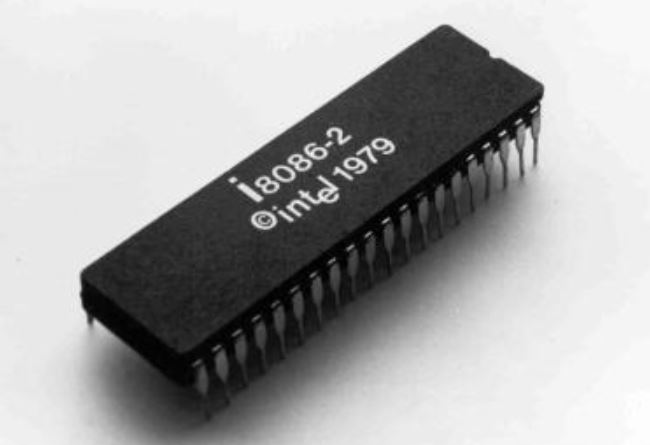
16-bit Microprocessor
Definition: Processes 16 bits of data at a time.
Example: Intel 8086, Intel 80286
Characteristics:
- Faster processing than 8-bit.
- Larger memory access (1 MB addressable in 8086).
- Can handle more complex instructions.
Use: Early PCs, industrial controllers, complex embedded systems
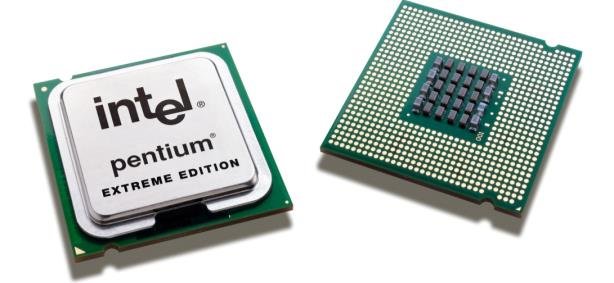
32-bit Microprocessor
Definition: Processes 32 bits of data at a time.
Example: Intel Pentium series, ARM Cortex-A series
Characteristics:
- Standard for modern PCs and laptops.
- Supports large memory (up to 4 GB theoretically).
- Supports multitasking and high-speed computation.
Use: Personal computers, smartphones, servers, gaming consoles
64-bit Microprocessor
Definition: Processes 64 bits of data at a time.
Example: AMD Ryzen, Intel i7/i9, Apple M1/M2
Characteristics:
- Very high performance.
- Supports large memory (16 exabytes theoretically).
- Supports modern operating systems and heavy software.
Use: Modern PCs, servers, high-performance computing, scientific applications

Based on Architecture
Microprocessors are also classified based on architecture:
CISC (Complex Instruction Set Computer)
Definition: Supports many complex instructions.
Example: Intel x86 series
Characteristics:
- One instruction can do multiple operations.
- Closely integrated with memory.
- Slower per instruction but fewer instructions per task.
Use: Desktop PCs, legacy software support
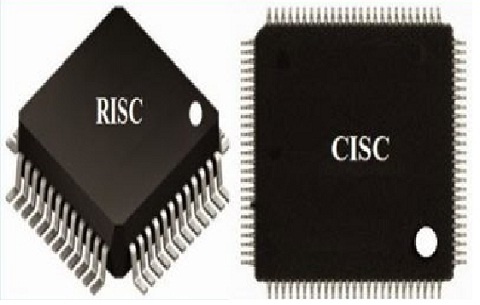
RISC (Reduced Instruction Set Computer)
Definition: Uses simple instructions.
Example: ARM architecture
Characteristics:
- Instructions are simple and fast.
- Power efficient, high performance per watt.
- Mostly used in mobile devices and embedded systems.
Use: Smartphones, tablets, embedded systems

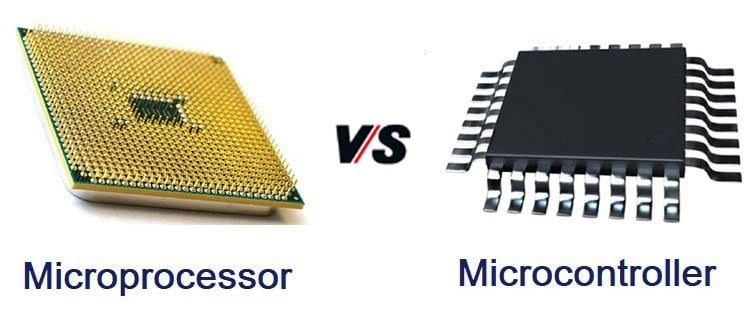
Microcontroller vs Microprocessor
Microprocessor: A microprocessor is only a CPU chip. This means it contains only the processing unit and requires external memory (RAM, ROM) and peripherals to function. It is mainly used in high-performance devices where complex processing and multitasking are required. Examples: Desktop computers, Laptops, Servers.
Microcontroller: A microcontroller is a single chip that integrates the CPU, memory (RAM + ROM), and peripherals (Timers, I/O ports, ADC/DAC, etc.). It is mostly used in embedded systems where the device has a specific and simple function. Examples: Washing machines, AC remotes, Toy robots, Smart appliances.
Key Differences:
| Feature | Microprocessor | Microcontroller |
|---|---|---|
| Component | CPU only | CPU + Memory + Peripherals |
| Memory | Requires external memory | Built-in memory |
| Cost | High | Low |
| Speed | High speed, supports multitasking | Moderate speed, single-task oriented |
| Applications | PCs, Laptops, Servers, High-end computing | Embedded devices, Smart appliances, Robotics, IoT devices |
Real-life Examples:
- Microprocessor: Intel i7 CPU in laptops, AMD Ryzen CPU in desktops.
- Microcontroller: Arduino Uno board, PIC microcontroller in washing machines, ESP32 in smart devices.
Summary: If you need high-speed and complex processing → choose a Microprocessor. If you need a single-purpose embedded device that is low-cost and low-power → choose a Microcontroller.
Summary Table (Quick View)
| Type / Architecture | Bits | Example | Use |
|---|---|---|---|
| 4-bit | 4 | Intel 4004 | Calculators, small embedded |
| 8-bit | 8 | Intel 8085 | Early PCs, small devices |
| 16-bit | 16 | Intel 8086 | PCs, industrial controllers |
| 32-bit | 32 | Intel Pentium, ARM Cortex | Modern PCs, smartphones |
| 64-bit | 64 | AMD Ryzen, Intel i7/i9 | High-performance computing |
| CISC | Any | Intel x86 | PCs, legacy software |
| RISC | Any | ARM Cortex | Smartphones, tablets |
| Microcontroller | Any | Arduino, PIC | Embedded devices |
Tip: Higher bit-width → more data processing and memory support. RISC → energy-efficient for modern devices. CISC → mostly for older PCs and heavy software compatibility.


Comments
Post a Comment