Microprocessors ke Alag-Alag Types
Microprocessors ko unke data bus width, architecture, aur purpose ke hisaab se classify kiya ja sakta hai. Mainly ye types hote hain:
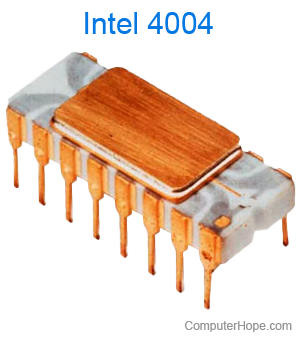
4-bit Microprocessor
Definition: Ye ek time me 4 bits data process karta hai.
Example: Intel 4004 (first commercial microprocessor)
Characteristics:
- Sirf simple arithmetic aur logic operations handle karta hai.
- Calculators aur basic embedded devices me use hota tha.
- Memory aur speed limited thi.
Use: Early calculators aur basic control devices
8-bit Microprocessor
Definition: Ek time me 8 bits data process karta hai.
Example: Intel 8085, Zilog Z80
Characteristics:
- Arithmetic aur logic operations thodi complex ho sakti hain.
- Memory address 64 KB tak possible.
- Program size limited.
Use: Early PCs, small embedded systems, simple gaming devices

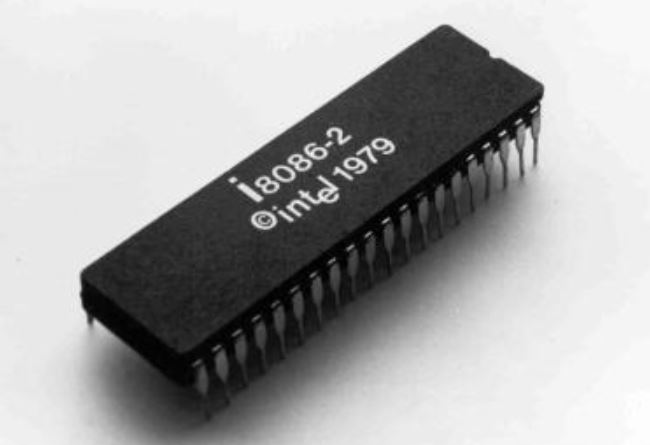
16-bit Microprocessor
Definition: Ek time me 16 bits data process karta hai.
Example: Intel 8086, Intel 80286
Characteristics:
- 8-bit se faster processing.
- Larger memory access (8086 me 1 MB addressable).
- Complex instructions handle kar sakta hai.
Use: Early PCs, industrial controllers, complex embedded systems
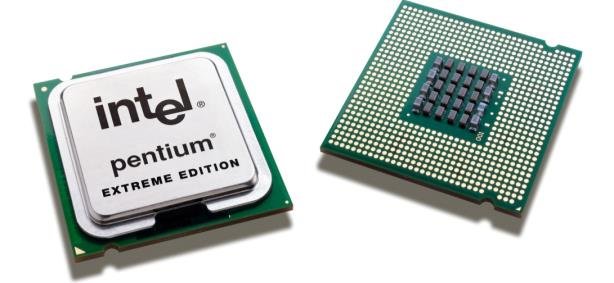
32-bit Microprocessor
Definition: Ek time me 32 bits data process karta hai.
Example: Intel Pentium series, ARM Cortex-A series
Characteristics:
- Modern PCs aur laptops ke liye standard.
- Large memory support (4 GB theoretically).
- Multitasking aur high-speed computation support karta hai.
Use: Personal computers, smartphones, servers, gaming consoles
64-bit Microprocessor
Definition: Ek time me 64 bits data process karta hai.
Example: AMD Ryzen, Intel i7/i9, Apple M1/M2
Characteristics:
- Very high performance.
- Large memory support (16 exabytes theoretically).
- Modern OS aur heavy software support karta hai.
Use: Modern PCs, servers, high-performance computing, scientific applications

Architecture ke hisaab se
Microprocessors ko architecture ke basis par bhi classify kiya ja sakta hai:
CISC (Complex Instruction Set Computer)
Definition: Ye processors complex instructions support karte hain.
Example: Intel x86 series
Characteristics:
- Ek instruction me multiple operations ho sakte hain.
- Memory ke saath closely integrated.
- Slower per instruction lekin kam instructions per task.
Use: Desktop PCs aur legacy software support
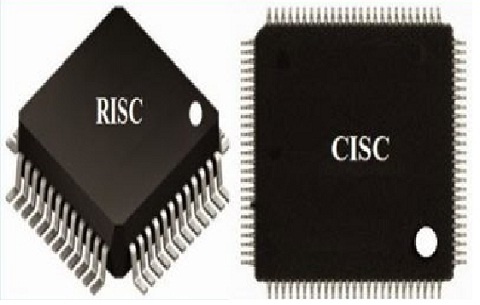
RISC (Reduced Instruction Set Computer)
Definition: Simple instructions use karta hai.
Example: ARM architecture
Characteristics:
- Instructions simple aur fast hain.
- Power efficient, high performance per watt.
- Mostly mobile devices aur embedded systems me use hota hai.
Use: Smartphones, tablets, embedded systems

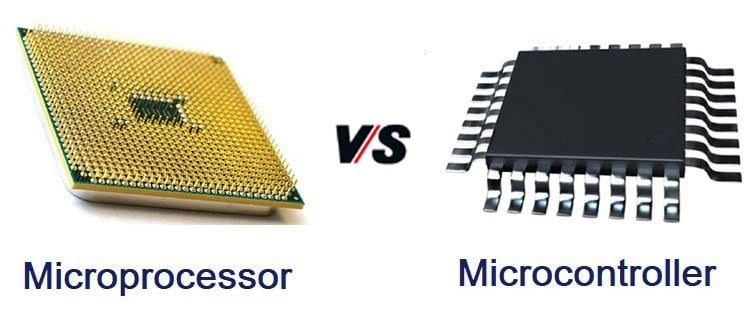
Microcontroller vs Microprocessor
Microprocessor: Ye sirf CPU chip hota hai. Matlab isme sirf processing unit hoti hai aur kaam karne ke liye external memory (RAM, ROM) aur peripherals ki zarurat hoti hai. Ye zyada tar high-performance devices ke liye use hota hai jaha complex processing aur multitasking ki zarurat hoti hai. Examples: Desktop computers, Laptops, Servers.
Microcontroller: Ye ek single chip me CPU, memory (RAM + ROM) aur peripherals (Timers, I/O ports, ADC/DAC etc.) integrated hota hai. Ye mainly embedded systems me use hota hai jaha device ka kaam specific aur simple hota hai. Examples: Washing machines, AC remote, Toy robots, Smart appliances.
Key Differences:
| Feature | Microprocessor | Microcontroller |
|---|---|---|
| Component | Sirf CPU | CPU + Memory + Peripherals |
| Memory | External memory required | Built-in memory |
| Cost | High | Low |
| Speed | High speed, multitasking | Moderate speed, single-task oriented |
| Applications | PCs, Laptops, Servers, High-end computing | Embedded devices, Smart appliances, Robotics, IoT devices |
Examples in real life:
- Microprocessor: Intel i7 CPU in laptop, AMD Ryzen CPU in desktop.
- Microcontroller: Arduino Uno board, PIC microcontroller in washing machine, ESP32 in smart devices.
Summary: Agar aapko high-speed aur complex processing chahiye → Microprocessor. Agar aapko single-purpose embedded device chahiye jo low cost aur low power consumption ho → Microcontroller.
Summary Table (Quick View)
| Type / Architecture | Bits | Example | Use |
|---|---|---|---|
| 4-bit | 4 | Intel 4004 | Calculators, small embedded |
| 8-bit | 8 | Intel 8085 | Early PCs, small devices |
| 16-bit | 16 | Intel 8086 | PCs, industrial controllers |
| 32-bit | 32 | Intel Pentium, ARM Cortex | Modern PCs, smartphones |
| 64-bit | 64 | AMD Ryzen, Intel i7/i9 | High-performance computing |
| CISC | Any | Intel x86 | PCs, legacy software |
| RISC | Any | ARM Cortex | Smartphones, tablets |
| Microcontroller | Any | Arduino, PIC | Embedded devices |
Tip: Higher bit-width → zyada data processing aur memory support. RISC → modern devices ke liye energy-efficient. CISC → older PCs aur heavy software compatibility ke liye.


Comments
Post a Comment